The custom apparel market has expanded significantly in recent years, driven by the growing demand for personalized clothing, promotional merchandise, and on-demand fashion products. As digital printing technologies continue to evolve, more entrepreneurs are entering the garment decoration industry, particularly those exploring DTF printer technology as a scalable solution.
One of the technologies that has played a major role in this transformation is the DTF Printer workflow. Direct-to-film printing allows decorators to produce high-resolution designs and transfer them onto garments with impressive color accuracy and durability.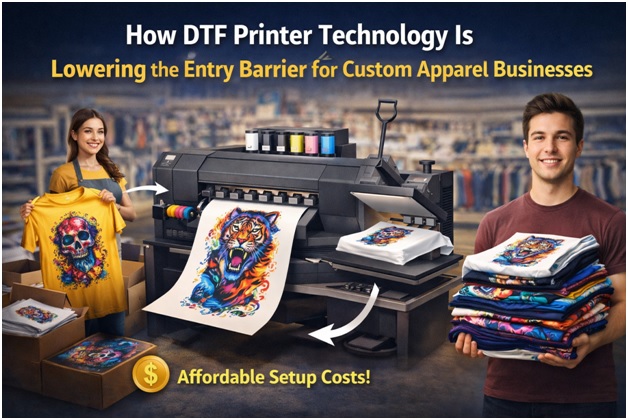
Unlike many traditional printing methods, DTF printing does not require complex pre-treatment processes or expensive industrial equipment. This flexibility has made it particularly attractive for small businesses, startups, and independent clothing brands.
The Challenge of Startup Costs
Despite the advantages of digital garment printing, the cost of specialized equipment has historically been one of the biggest barriers to entry for new businesses.
Many traditional printing systems require large-format printers, specialized ink systems, and extensive maintenance procedures. For entrepreneurs who want to test new product ideas or launch small apparel brands, investing thousands of dollars in equipment can be risky.
However, recent innovations in printing chemistry are helping reduce these costs while maintaining professional print quality.
A New Approach to Digital Printing
Innovations such as MAGICINK™ and MAGICPOWDER™ introduce a new way of approaching digital garment printing by focusing on improving the chemistry behind the printing process.
MAGICINK™ is engineered to deliver stable performance within supported desktop printers. By improving pigment stability and reducing clogging tendencies, it allows decorators to maintain consistent printing results without the heavy maintenance cycles often associated with pigment-based ink systems.
For businesses using modern DTF Printers consistent ink flow is essential for maintaining color accuracy and production efficiency.
MAGICPOWDER™, meanwhile, introduces a colored adhesive powder that enhances both bonding strength and visual vibrancy. Traditional transfer workflows often rely on clear adhesive powders, which may require additional white ink layers to achieve strong color opacity.
By combining adhesive bonding with color reinforcement, this new approach helps produce vibrant prints while maintaining flexibility and durability.
Improving Print Feel and Comfort
Another important factor in garment decoration is the overall feel of the printed design. Customers often prefer prints that feel soft and flexible rather than thick or rigid.
Modern textile chemistry innovations aim to reduce the heavy “plasticky” feel that sometimes occurs with thick transfer layers. By improving pigment stability and adhesive interaction with the fabric, decorators can produce prints that feel more natural on the garment.
This improvement in hand feel can significantly enhance customer satisfaction, particularly for clothing brands that focus on comfort and wearability.
Supporting Small Businesses and Creators
The accessibility of digital garment printing is opening new opportunities for entrepreneurs, independent designers, and online sellers.
Small businesses that once relied on outsourcing their printing can now produce apparel in-house using modern DTF printer workflows. This flexibility allows creators to experiment with new designs, respond quickly to customer demand, and maintain greater control over product quality.
From small Etsy stores to growing streetwear brands, digital printing technology is enabling a new generation of apparel businesses to compete in the market.
Looking Ahead
As the custom apparel industry continues to grow, innovations in printing chemistry and workflow design will play an increasingly important role in shaping the future of garment decoration.
By reducing equipment costs and simplifying production processes, technologies like MAGICINK™ and MAGICPOWDER™ demonstrate how DTF printer technology is becoming more accessible than ever before.
For decorators seeking to improve efficiency while maintaining high-quality results, the combination of modern DTF printers and advanced textile chemistry represents a powerful step forward for the apparel industry.

Editor of Fashion2Apparel. She is a fashion designer and ex-lecturer in Fashion Designing. She wants to spread fashion knowledge throughout the world.