What Is Textile Pretreatment?
Before cotton fabric can be dyed, printed, or finished as white goods, it must first go through pretreatment. Different textile materials contain different natural and added impurities, so the preparation process varies from one substrate to another. Even so, the main pretreatment stages follow a familiar pattern. They remove loose fibers, sizing materials, natural impurities, and coloring matter, while also improving the fabric surface for later processing.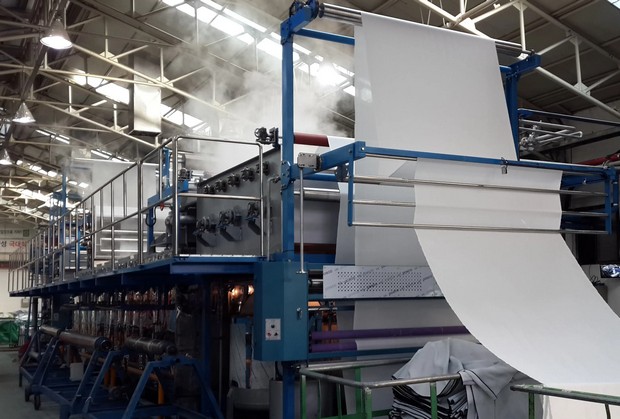
For cellulosic fabrics, especially cotton, this preparation sequence is one of the most important parts of the full textile route. A well handled pretreatment process gives the fabric a cleaner appearance, better absorbency, and a more even result in later coloration.
Main Steps in Cellulosic Fabric Pretreatment
A typical continuous pretreatment sequence for cotton cellulosic fabric is:
Grey inspection → Singeing → Desizing → Scouring → Bleaching → Mercerization
When white goods are being produced, fluorescent brightening may also be added at the end.
Grey Fabric Inspection
Grey inspection is the first step in the process. Its purpose is to identify any fabric faults that are already present in the grey state. The inspection is usually carried out visually, either on a long inspection table or with a specially designed inspection machine.
Faults are generally marked on the fabric selvedges with colored threads or similar markings so they can be identified later. If the number of faults is too high and the defects cannot be mended, the goods are rejected at this stage. After inspection, short pieces are sewn together to make a continuous length for processing.
Singeing Process
Singeing is used to remove loose surface hairs from cotton goods and give the fabric a smoother and more uniform surface. The fabric is passed quickly over a singeing machine fitted with gas burners. These burners are arranged so that both sides of the fabric are singed.
The fabric speed must be controlled carefully. If the speed is too slow, the cloth may catch fire or become scorched. After singeing, the fabric is cooled by cooling cylinders or by a water bath so that the handle can be recovered.
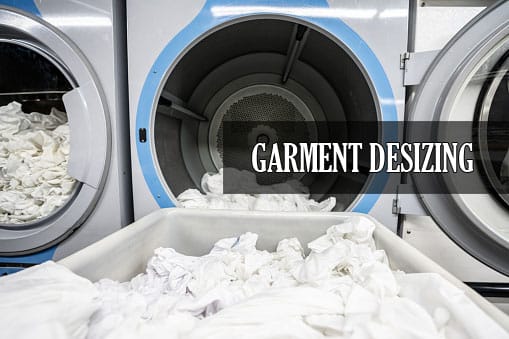
Desizing Process
Desizing removes the sizing materials that were applied to warp yarns during weaving. These sizes are usually made of starches or synthetic agents such as polyvinyl alcohol, or PVA.
In the past, desizing was often done by chemical methods such as acid steeping, alkali steeping, and oxidative treatment. These methods were time consuming and polluting. A more practical and faster method now uses biochemical enzymes that break down and digest the size, especially starch based size. The enzyme residues and decomposed size materials are then removed by successive hot and cold water rinsing.
Scouring Process
Scouring removes the natural impurities and dirt from grey textiles so that a clean white base is produced. It also improves the water absorbing property of the fabric, which is important for later colour processing. In cotton, the main impurities include seed fragments, waxes, oils, dirt, and natural coloring matter.
The most common scouring method uses a strong alkali, usually sodium hydroxide or caustic soda, together with a detergent. The fabric is treated at a temperature near boiling point for the optimum period of time. This stage must be controlled carefully, because excessive scouring can oxidize cellulose and weaken the fabric strength.
Bleaching Process
Bleaching improves the whiteness of scoured textiles and produces a brighter white ground. This makes the material suitable for fluorescent whitening as well as for coloration in brilliant shades.
The three commonly used bleaching agents are sodium hypochlorite, sodium chlorite, and hydrogen peroxide. Bleaching removes the remaining coloring substances and gives the fabric a cleaner and whiter appearance.
Mercerization Process
Mercerization is a chemical treatment in which cotton fabric is placed in a cold bath of concentrated caustic soda under controlled tension. The treatment is carried out in a special mercerizing machine.
Under the action of the strong alkali, the flat, twisted, ribbon like cotton fiber swells and changes into a straighter, rounder shape. This gives the fabric a silk like appearance and improves its luster, dimensional stability, fabric strength, and chemical reactivity.
Double mercerization is a process in which yarns are mercerized first, then knitted into fabric, and the fabric is mercerized again. Another chemical treatment, called the liquid ammonia process, is used especially for yarn and knitted fabric. It can produce a similar effect to mercerization, but it is less popular because the application is complicated. The process operates at minus 30°C in a vacuum chamber.
Fluorescent Brightening for White Goods
Fluorescent brightening is also called fluorescent whitening or optical brightening. It is used to further enhance bleached textiles that are intended for white goods.
Because of its complex organic structure, the fluorescent brightening agent can absorb light energy in the ultraviolet region and reemit it in the visible blue or violet region. This creates a whitening effect that makes the treated material look whiter. In some cases, a blue or violet tint is added together with the brightening agent to produce an even whiter appearance.
Why Pretreatment Matters
Pretreatment is not just a cleaning stage. It prepares the fabric for the next process and helps each later step work properly. Singeing removes surface hair, desizing clears away woven size, scouring removes natural impurities, bleaching improves whiteness, and mercerization enhances the overall fabric properties. When each stage is done correctly, the final material is cleaner, more stable, and better suited for dyeing, printing, or white goods.
Conclusion
Cellulosic fabric pretreatment follows a clear sequence, starting with grey inspection and moving through singeing, desizing, scouring, bleaching, and mercerization. Each stage removes a specific type of impurity or improves a key fabric property. When fluorescent brightening is added, the result is an even whiter appearance for white goods. With proper control at every step, the fabric becomes more suitable for high quality finishing and further textile processing.

Editor of Fashion2Apparel. She is a fashion designer and ex-lecturer in Fashion Designing. She wants to spread fashion knowledge throughout the world.