Last Updated on June 25, 2026
Polyester stands as one of the most widely used synthetic fibers in the world, finding its way into everything from everyday clothing to industrial tire cords. Its commercial success is built on a combination of strength, resilience, easy care, and remarkable versatility. Understanding where polyester comes from, how it is made, and what makes it perform the way it does helps explain why it continues to dominate both the apparel and technical textiles markets decades after its introduction.
History of Polyester Fiber
The story of polyester begins with W. H. Carothers, who concentrated his early polymer research on polyesters before encountering difficulties and shifting his attention to polyamides, from which he synthesized nylon. Carothers did spin the world’s first polyester fiber in his laboratory in 1930, but the fiber had a low melting point and poor mechanical properties, making it unsuitable for practical use. It was set aside.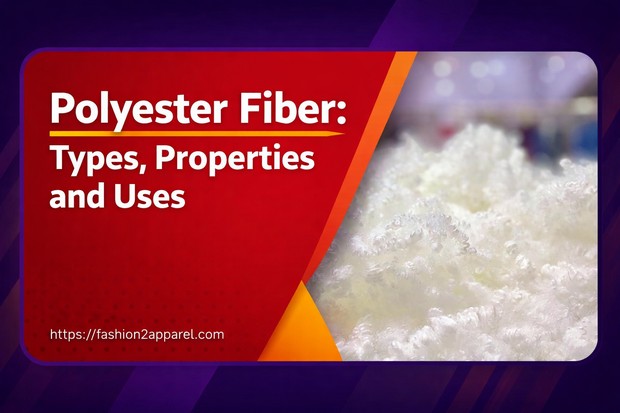
In 1941, two British researchers, Whinfield and Dickson, developed a polyester material based on terephthalate esters. This discovery laid the foundation for today’s most commonly used polyesters: polyethylene terephthalate (PET), polytrimethylene terephthalate (PTT), and polybutylene terephthalate (PBT). These terephthalate-type polyesters possessed higher melting points and better mechanical properties, giving them far greater practical value than Carothers’ early fiber.
Following this breakthrough, English researchers at Calico Printers Association concentrated on the polyester group and developed what would become commercially viable polyester fiber. Imperial Chemical Industries (ICI) in Britain put PET fiber into production and marketed it under the name Terylene. DuPont purchased one of ICI’s patents in 1949 and began manufacturing PET fiber in the United States under the brand name Dacron. The first DuPont plant for Dacron production opened in March 1953.
What Is Polyester?
The U.S. Federal Trade Commission defines polyester as “a manufactured fiber in which the fiber-forming substance is any long-chain synthetic polymer composed of at least 85 percent by weight of an ester of a substituted aromatic carboxylic acid, including but not restricted to substituted terephthalate units.” This definition becomes particularly important when considering newer polyester variants, as not all polyester-like fibers qualify under it.
How Polyester Fiber Is Made
Raw Materials and Polymerization
The starting materials for conventional polyesters are an organic acid and an alcohol, both derived from petroleum. Some newer polyesters, however, are derived in whole or in part from renewable agricultural resources. The most commonly used acid is terephthalic acid or its dimethyl ester.
The major polyester in manufacture and use is PET, formed by the reaction of terephthalic acid and ethylene glycol. At high temperatures and under vacuum, the two compounds react with an antimony catalyst through a series of steps that build up a polymer chain of considerable length. Older production plants used dimethyl terephthalate because pure terephthalic acid was difficult to obtain. Most producers today begin with the acid directly, reacting it with ethylene glycol in a direct esterification process.
Spinning Process
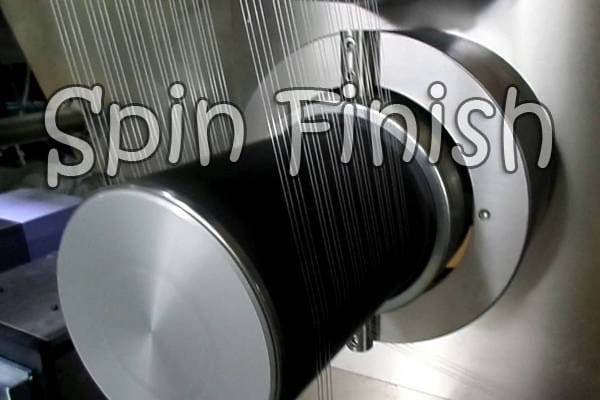
In earlier manufacturing, the melted polymer was extruded as ribbons, cooled, and broken into chips, which were then remelted and spun into fibers. It is far more common today to combine polymerization and spinning into one continuous process. The polymer is produced at high temperature, and the melt is pumped directly to the spinnerets. As the fibers exit the spinneret, they solidify on contact with cool air and are wound loosely onto cylinders.
Cross-sectional shape can be modified during spinning to create fibers for special purposes. Hollow polyester fibers are made into fiberfill with good insulating qualities, while multilobal fibers enhance moisture wicking.
Drawing and Finishing
For staple fiber production, several sets of filaments, each containing 250 to 3,000 filaments, are brought together and coiled in large cans in preparation for drawing. The filaments are heated and drawn to several times their original length to orient the molecular structure, then allowed to relax to release internal stresses and reduce shrinkage. The drawn tow is crimped, dried, and heat-set for stability, then cut into staple lengths, usually 38 to 152 millimeters (1.5 to 6 inches), and baled for sale.
Fiber intended for continuous filament yarn is either drawn directly and packaged, or wound on bobbins for draw twisting or draw texturing. Yarn for weaving, knitting, or texturing is often processed on a draw twister that heats and draws the fibers while imparting a small amount of base twist. Industrial yarns requiring high strength undergo an additional stage of heating and drawing. High-speed spinning processes can also yield partially oriented yarn (POY), which is then drawn and textured in a single integrated operation.
Types of Polyester Fiber
PET (Polyethylene Terephthalate)
PET is by far the most widely produced and used polyester fiber. When people refer to polyester without specifying a type, they almost always mean PET. Its melting point is approximately 260°C, and its specific gravity is 1.38 g/cc. PET is melt spun and can be produced as filament yarn, textured yarn, or staple fiber for blending with other fibers.
PTT (Polytrimethylene Terephthalate)
PTT uses the same acid as PET but a different alcohol: propanediol, which contains one additional CH2 group. PTT had been included in the original Whinfield and Dickson patent of 1941 but was not commercially feasible for decades because propanediol was prohibitively expensive. Once more cost-effective production routes were developed, both from petroleum and through fermentation of glycerol, PTT became cost competitive. Shell commercialized it under the brand name Corterra, while DuPont developed a fermentation process using corn starch and markets PTT polymer under the brand name Sorona. PTT has a melting point of 227°C and a specific gravity of 1.35 g/cc. It is notably softer than PET and shows better elastic recovery than both PET and nylon 66, making it well suited for clothing and carpet applications.
PBT (Polybutylene Terephthalate)
PBT is used for making both fibers and plastics. Its alcohol component contains four CH2 groups, one more than PTT. Because PET, PTT, and PBT are all based on terephthalates of different glycols, with PET having two methylene groups, PTT having three, and PBT having four, they are sometimes referred to as 2GT, 3GT, and 4GT respectively. PBT’s melting point is 223°C. Its mechanical properties are close to those of PTT, and its elastic recovery is better than PET, though not quite as good as PTT. Its cost is lower than PTT, and it is commonly used in bicomponent yarns with PET.
PEN (Polyethylene Naphthalate)
PEN has back-to-back joined aromatic rings in its structure, making it stiffer than PET and giving it a higher melting point. Its very high modulus makes it well suited for demanding technical applications, particularly tire cords, where PEN outperforms PET in both strength and stiffness.
PLA (Polylactic Acid) Fiber
Interest in sustainable materials led to the commercial development of polylactic acid (PLA) fibers. Although PLA contains repeating ester units, it does not meet the FTC definition of polyester because it lacks aromatic rings. It was therefore designated as a separate generic category, defined as “a manufactured fiber in which the fiber-forming substance is composed of at least 85 percent by weight of lactic acid ester units derived from naturally occurring sugars.”
The current source of these sugars is corn. Dextrose from corn is fermented to yield lactic acid, which is then polymerized into an aliphatic polyester with no aromatic rings. The resulting polymer chains are more flexible, and the melting temperature is lower than that of conventional polyesters. PLA’s appeal lies in the fact that it is a biodegradable, naturally sourced material that can still be melt spun using standard equipment.
Molecular Structure of Polyester
In polyester fibers, the long polymer chains are arranged in amorphous and crystalline regions. The extent of crystallinity depends on the chemical structure of the polymer and the degree of drawing during manufacture. Polyester does not crystallize as easily as nylon because its aromatic rings are bulky and inhibit the close alignment of molecular chains. There are also no polar groups in polyester polymers, which means hydrogen bonds cannot form between chains. The aromatic rings do, however, stiffen the polymer chains, contributing to modulus, strength, and thermal stability. In PTT, the polymer chains adopt a zigzag configuration, which gives the fiber greater flexibility compared to PET.
Physical Properties of Polyester Fiber
a) Appearance and Cross-Section
Polyester fibers can be manufactured in a range of cross-sectional shapes, including round, trilobal, pentalobal, and hollow configurations. Under the microscope, round fibers appear as long, smooth rods, with spots of pigment visible when the fiber has been delustered. Multilobal fibers appear striated when viewed longitudinally.
b) Strength
Polyesters are relatively strong fibers, and their strength is not affected by moisture, which contributes directly to good launderability. PET can be produced across a range of tenacities depending on the intended end use. Staple fibers generally have lower strength, while high-tenacity filaments for industrial applications are considerably stronger. PEN fibers have high inherent strength, while PTT and PLA fibers sit at the lower end of the strength range within the polyester family.
c) Modulus
A high modulus is one of the characteristics that sets polyester apart from other commonly used synthetics. PET has a modulus of more than 100 g/d, while nylon typically falls between 20 and 40 g/d depending on type. The aromatic rings that stiffen aramid fibers perform a similar role in polyester. PTT, with its more flexible chain structure, has a lower modulus closer to that of nylon. PEN, with its joined aromatic rings, has a very high modulus, making it the preferred choice for tire cords.
d) Elongation and Elastic Recovery
Polyester stretches a moderate amount before breaking, with elongation primarily dependent on the degree of drawing during processing. Staple fibers, which typically undergo less drawing, have higher elongation. Polyester recovers well from low stretch, though recovery decreases when the fiber is highly extended. It is generally inferior to nylon in elastic recovery. PTT, with its lower modulus, has higher elongation than PET and excellent recovery, even better than nylon 66. PLA fibers recover well from low stretch but perform poorly when highly elongated.
e) Resilience
Resilience is one of polyester’s strongest attributes. For this reason, polyester is frequently blended with less wrinkle-resistant fibers to produce easy-care fabrics. The compression recovery of PET is not quite as good as nylon, but PTT shows considerably better resilience, making it a competitive option for carpets.
f) Abrasion Resistance
Abrasion resistance is good and makes polyester a preferred choice for products where durability matters. Although it does not match the extremely high values of polyamide fibers, it is considerably better than most other chemical and natural fibers. PLA is the exception, with lower abrasion resistance compared to the rest of the polyester family.
Chemical Properties of Polyester Fiber
a) Moisture Absorption
The moisture regain of all polyesters is low, ranging from only 0.2 to 0.8 percent. Despite being essentially nonabsorbent, polyesters do have wicking ability, which improves comfort in warm weather by carrying perspiration along the fiber surface where it evaporates. Multilobal cross sections enhance this effect by channeling liquid moisture between the lobes. Special finishes can also be applied to make polyester more hydrophilic where needed.
b) Heat Resistance and Behavior in Flame
The melting point of PET ranges from approximately 260°C. PTT has a lower melting point due to its more flexible chain, while PEN has a higher melting point. Polyesters generally do not require pressing because of their excellent wrinkle recovery. When pressing is necessary, a warm rather than hot iron should be used. Polyesters respond particularly well to heat-setting into pleats, and this property contributed to the fiber’s early commercial success in the 1950s. Heat-setting not only stabilizes size and shape but also enhances wrinkle resistance.
Polyester will shrink away from a flame, melt, and leave a hard, black residue. Burning fabric produces a strong, pungent odor, and melted polyester can cause severe burns.
c) Chemical Resistance
Polyesters are not harmed by solvents used in professional dry cleaning and are not damaged by household bleaches. While polyesters resist acids well, they may be adversely affected by strong bases. PLA is more susceptible to chemical degradation than conventional polyesters. The level of alkalinity found in ordinary detergents, however, is not harmful to any of the common polyester types.
Environmental Properties of Polyester Fiber
a) Resistance to Microorganisms and Insects
Polyesters are resistant to attack by microorganisms, though bacteria will grow in soiled items that have absorbed perspiration. PLA is an exception, being developed and marketed specifically for its biodegradability.
b) Sunlight and Aging Resistance
Polyester fibers will degrade after prolonged exposure to sunlight, but they show better sun resistance than most other fiber types. This resistance improves further when the fibers are placed behind glass that screens out harmful ultraviolet rays, making polyester highly suitable for curtains and draperies. Age has no appreciable effect on polyester performance.
c) Dimensional Stability
Polyesters that have been heat-set have excellent dimensional stability, provided the heat-setting temperature is not exceeded. Because of their low moisture regain, polyester fibers do not shrink when wet and can help stabilize fabrics when blended with other fibers.
Common Uses of Polyester Fiber
Polyester is used across a wide range of wearing apparel, home furnishings, and industrial products, either alone or in blends. Its excellent resilience makes it especially suited for easy-care fabrics, and because it is a manufactured fiber, its properties can be tailored for applications as diverse as microfiber rainwear and industrial tire cords.
Wrinkle-resistant fabrics are frequently made from blends of cotton and polyester. PET blends particularly well with cotton because the moduli of the two fibers are similar. Wool and polyester blends offer a wool-like hand and appearance alongside the easy-care benefits of polyester. Blends with rayon, acetate, triacetate, acrylics, and natural fibers such as silk, flax, and ramie are also widely produced. Creases and pleats in these blended fabrics can be heat-set through the thermoplastic properties of the polyester component.
A large volume of polyester and polyester-blend fabrics goes into curtains, draperies, sheets, and pillowcases. Polyester is also increasingly used in carpets, where PTT, with its higher resilience and lower modulus, competes well with nylon. Sleeping bags, insulated outdoor clothing, and pillow and comforter fillings are promoted as easy-care, nonallergenic alternatives to goose down, with hollow polyester fibers offering particular advantages. Polyester dominates the market for both the outer fabric and the filling in stuffed toys.
Industrial uses include fire hoses, power belting, ropes, base fabrics for coatings, nets, tire cords, and sails. PEN fibers are even better suited for many of these demanding applications because they exceed PET in both strength and modulus. PLA fibers are beginning to appear in nonwoven disposable products such as wipes and diapers, and copolymers of PLA are used as dissolvable surgical sutures.
How to Care for Polyester Fabric
Since polyester is blended with so many other fibers, care labels should always be checked before washing or drying. Procedures appropriate for 100 percent polyester may not be suitable for blended fabrics.
Polyester fabrics are generally machine washable using warm, not excessively hot, water and ordinary laundry detergents. Household bleaches will not harm white polyester fabrics. Oily stains should be pre-treated with a grease solvent before laundering, as these stains can be difficult to remove through washing alone.
Polyesters should be dried at moderate temperatures, and items should be removed from the dryer promptly to avoid setting creases that then require ironing. As a general rule, polyesters should not need pressing after drying, though a moderately warm iron can be used when necessary. Blends of polyester and cotton can present a practical challenge: the temperature suitable for polyester may not be high enough to press wrinkles from cotton, while the temperature needed for cotton may damage the polyester. Most polyester fabrics can be dry-cleaned safely, though care labels should always be checked first.
The Future of Polyester
Polyester has come a long way from the abandoned early experiments of the 1930s to become the dominant synthetic fiber of the modern era. Its adaptability, across fiber types, cross-sectional shapes, processing routes, and end-use applications, is what makes it genuinely difficult to replace. The development of bio-based variants like PLA and PTT from renewable sources signals that the polyester family is still evolving. As sustainability pressures grow across the textile industry, the next generation of polyesters will likely push further in the direction of reduced environmental impact without giving up the performance characteristics that made polyester indispensable in the first place.
References
[1] Collier, B. J., & Tortora, P. G. (2015). Understanding Textiles (7th ed.). Pearson.
[2] Veit, D. (2022). Fibers: History, Production, Properties, Market.
[3] Li, D. (2020). Cut protective textiles. Woodhead Publishing.
[4] Sinclair, R. (2014). Textiles and fashion: Materials, Design and Technology. Woodhead Pub Limited.
[5] Kadolph, S. J. (2021). Textiles (12th ed.). Pearson.

Editor of Fashion2Apparel. She is a fashion designer and ex-lecturer in Fashion Designing. She wants to spread fashion knowledge throughout the world.